How to Measure a Box (Length x Width x Height)
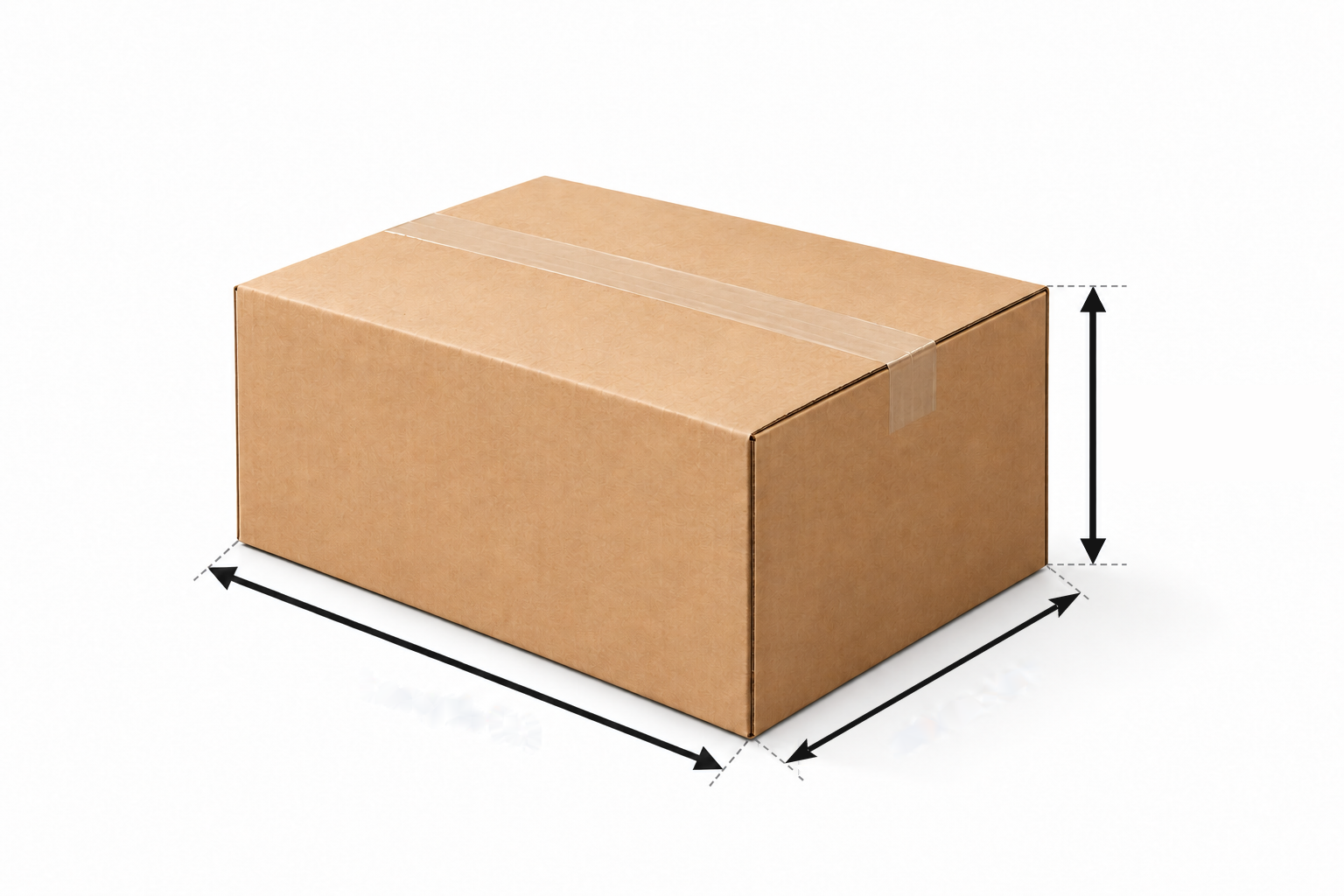
Direct Answer: Knowing how to measure boxes follows the standard L × W × H rule: measure the longest side for Length (L), the shorter horizontal side for Width (W), and the vertical distance from bottom to top for Height (H). Always measure the inside for fitting items and the outside for shipping rates.
Length (L) is the longest side, Width (W) is the shorter side, and Height (H) is the vertical depth from bottom to top.
Measure the inside to check if your item fits. Measure the outside (and round up to the next whole inch) to calculate shipping cost.
Box Volume & Carrier DIM Weight Calculator
Calculate cubic volume, length + girth, and billable shipping weight:
How to Measure a Box in 3 Simple Steps
Measure Length (L) First
Look at the top opening of the box and measure the longest horizontal side from corner to corner.
Measure Width (W) Second
Measure the shorter horizontal side of the box opening from front to back.
Measure Height (H) Last
Measure the standing vertical side from the bottom base straight up to the top edge.
Quick Reference: Standard Measurements of a Box
Common moving and shipping box dimensions with their volume and UPS/FedEx DIM weight:
| Box Category | Dimensions (L × W × H) | Cubic Volume | DIM Weight (139 Divisor) |
|---|---|---|---|
| Small Parcel Box | 8" × 6" × 4" (20 × 15 × 10 cm) | 192 cu in (3.1 L) | 2 lbs (0.9 kg) |
| Shoe / Apparel Box | 14" × 10" × 6" (36 × 25 × 15 cm) | 840 cu in (13.8 L) | 7 lbs (3.2 kg) |
| Small Moving Box (1.5 cu ft) | 16" × 12" × 12" (41 × 30 × 30 cm) | 2,304 cu in (37.8 L) | 17 lbs (7.7 kg) |
| Medium Moving Box (3.0 cu ft) | 18" × 18" × 16" (46 × 46 × 41 cm) | 5,184 cu in (85.0 L) | 38 lbs (17.2 kg) |
| Large Moving Box (4.5 cu ft) | 24" × 18" × 18" (61 × 46 × 46 cm) | 7,776 cu in (127.4 L) | 56 lbs (25.4 kg) |
How to Measure a Box for Shipping (3 Common Mistakes to Avoid)
Rounding Down Fractions
Carriers round any fraction of an inch up to the next whole inch. Measuring 12.2" and entering 12" can trigger a carrier billing adjustment.
Ignoring Bulging Box Sides
Carrier laser scanners measure the widest point of the box. Overpacking a box so the sides bulge adds 1" to 2" to your billed size.
Mixing Up Inside & Outside Size
Cardboard walls are 1/8" to 1/4" thick on each side, so a box printed as 12" × 12" × 12" inside is roughly 12.5" outside.
Frequently Asked Questions
How do I measure a box for shipping?
Measure the outside of the box as length by width by height. Length is the longest side, width is the next, and height is the vertical side. Carriers such as UPS and FedEx round each dimension up to the next whole inch, so measure carefully.
In what order do you write box measurements?
Length x Width x Height. For a box with an open top, measure height from the bottom to the top of the closed flaps.
What is the difference between inside and outside box dimensions?
Inside dimensions are the usable space for your item, and outside dimensions include the cardboard walls and are what carriers use to calculate shipping cost.
What is dimensional (DIM) weight?
DIM weight is length x width x height divided by a carrier divisor, such as 139 for many domestic UPS and FedEx rates and 166 for some retail rates. You are billed on the greater of the actual weight and the DIM weight. Divisors change, so confirm with your carrier. The calculator above lets you change the divisor.
How do I measure a box for USPS, UPS or FedEx?
The measuring method is the same. Measure the outside length, width and height. Some services also use girth, which is length + 2 x (width + height), so check the carrier's size limits.